Every July, some 2,000 of the most powerful men in America drive up into a redwood forest, put on hooded robes, and burn a body at the foot of a giant owl. It is a summer camp. And somehow, that is the least strange thing about the place. The campers are presidents. Generals. The men who run the banks. Every summer they vanish into the trees together for two weeks — and in 150 years, not one of them has really explained why.
You have probably heard the wilder version. A secret cabal. Satanic rites. A shadow government picking presidents in the woods. We will sort the rumors from the record later. For now you do not need them, because the documented version is already strange enough. The robes. The owl. The fire. The guest list of presidents and chief executives. Real, every one of them. The strange part was never the rumor. It is the part nobody disputes. And here is what nobody disputes: what actually happens up there is genuinely hard to find out. No cameras. No notes. No press. The most powerful men in America, alone in a forest for two weeks, under one firm rule. Weaving spiders come not here.
No Business
The Bohemian Club was founded in San Francisco in 1872, by journalists and artists who wanted somewhere to drink and talk. The Grove itself started as a going-away party — a farewell in the redwoods for a Shakespearean actor who was leaving town. He left. Everyone else kept coming back, every July, for the next 150 years. Within a generation, the artists were comfortably outnumbered by the men who could afford the wine. One early member, the satirist Ambrose Bierce, watched it happen and wrote the place off as a sanctuary for rich clowns. He kept his membership.
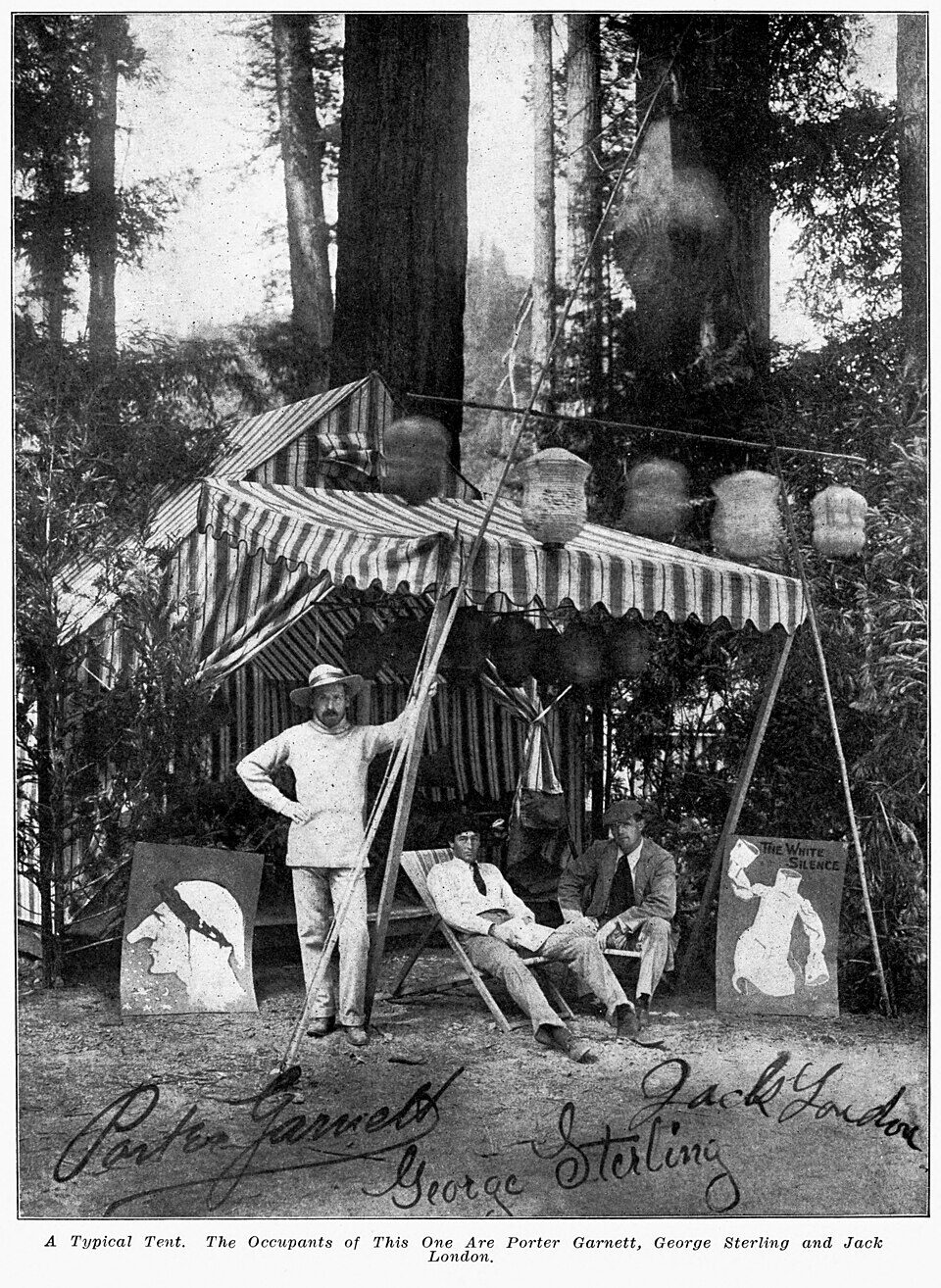
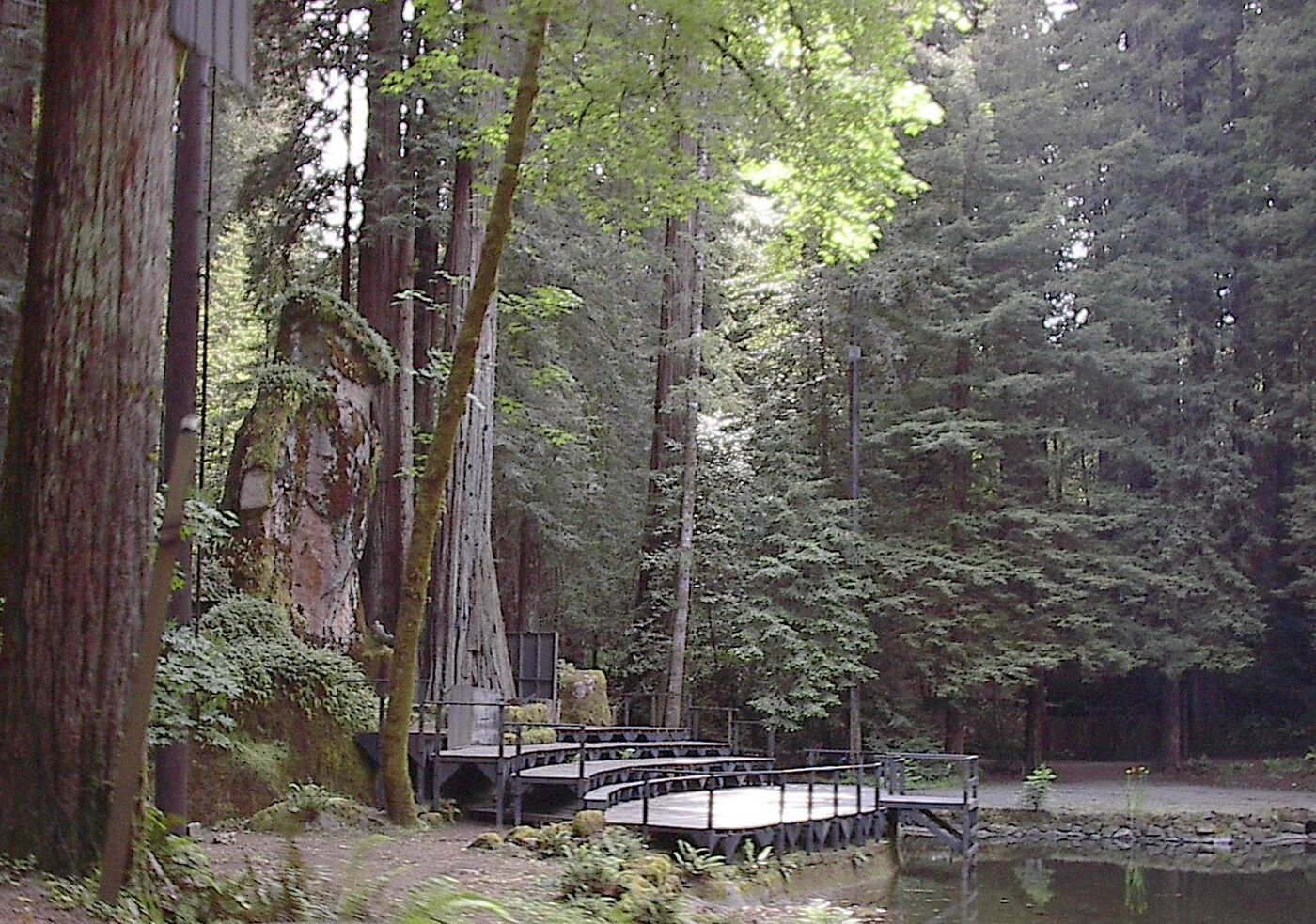
Its summer home is the Grove — 2,700 acres of old-growth redwood near Monte Rio, on the Russian River, 70 miles north of the city. Every July, for more than two weeks, around 2,500 members and guests come up to camp among the trees. The other fifty weeks, it is a very expensive empty forest. Camp is doing some heavy lifting in that sentence. The Grove is divided into more than a hundred separate camps, each with its own name and character. The waiting list runs decades, and forty years in earns you a title: Old Guard. You cannot buy your way to it. You have to outlive the list.
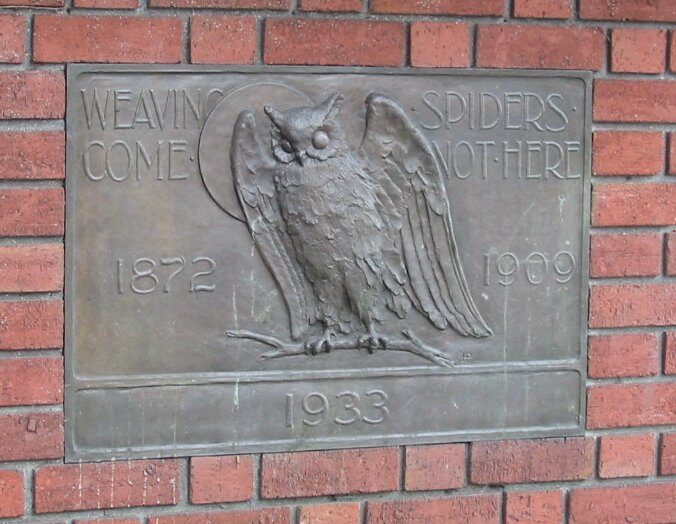
Over all of it presides the club motto, lifted from Shakespeare. Weaving spiders come not here. It means: leave your business at the gate. No deals, no scheming, no work. One reporter who got inside watched a corporate raider collect his phone messages at the shoeshine stand. The spiders, it turns out, weave wherever there is a chair.
Membership is, and always has been, men only. When the club was sued over hiring women as employees, its lawyers argued in open court that the men needed to relax freely — specifically, that they were in the habit of relieving themselves against the redwoods, and a female presence would inhibit them. This argument was entered into the legal record of the state of California. They lost.
The Symbolic Burn
The opening ceremony is called the Cremation of Care, and they have performed it, in some form, since 1881. By every credible account it is a piece of theater — amateur dramatics in the grand Victorian tradition, the same family as the Masons and the Elks. It is also genuinely strange, and knowing it is theater does not entirely fix that.
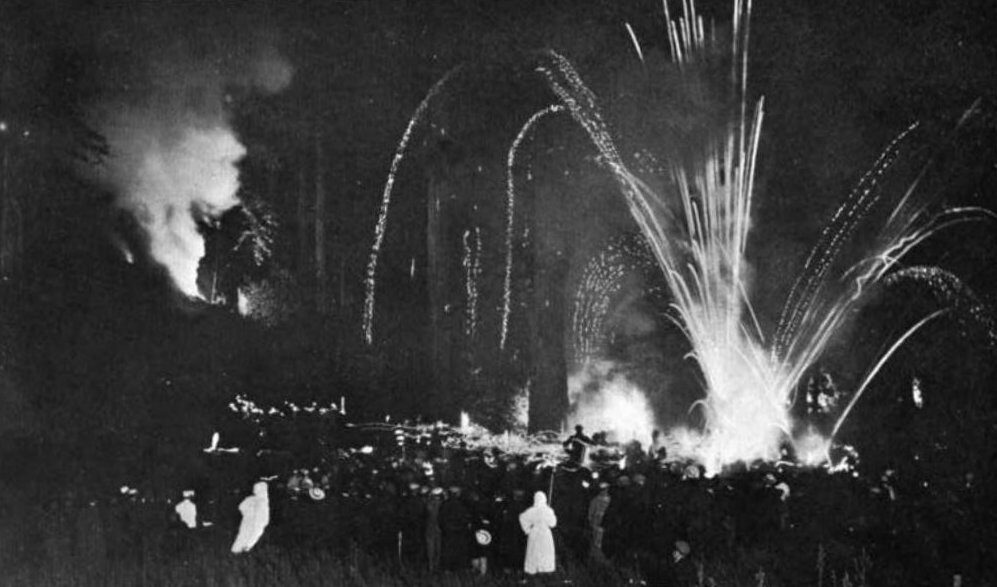
On the first night, robed figures process to the lake. An effigy called Care — the sum of every worldly worry the members hauled up the hill — is ferried across the water in a small black boat, laid at the foot of the owl, and set alight. Fireworks follow. A band plays. The worries, symbolically, are dead for a fortnight. In the script, Care does not go quietly; his amplified voice taunts the priests across the water. For many years that voice — booming out of the owl — belonged to the most trusted man in America: the broadcaster Walter Cronkite, a member. So the owl had a voice, a face, and the full confidence of the nation. And the actual conference had not started yet.
The members will tell you, reasonably, that it is allegory. You leave your cares behind; the fire is the leaving. And that is almost certainly all it is. It is just allegory that involves robes, a lake, a forty-foot owl, and a burning man, staged every year by people who run armies and central banks.
A Rich Man's U.N.
The guest list reads like a wing of a presidential library. Hoover. Eisenhower. Nixon. Reagan. Both Bushes. Kissinger, Shultz, a long row of executives and bankers. The camps double as a seating chart: you do not get assigned a cabin, you get assigned a network. Nixon, a regular, was caught on his own White House tapes complaining bitterly about the place. The review was scathing. He went back the next chance he got.
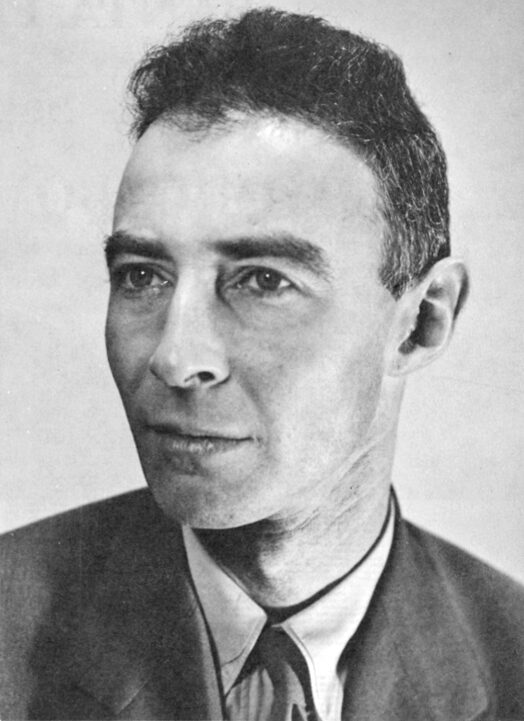
During the day the Grove hosts what it calls Lakeside Talks — off-the-record addresses by cabinet members, generals, and statesmen. No press. No recordings. And at least once, the summer camp made history. In September 1942, a committee of physicists met among the redwoods to coordinate a wartime project. The names in the room included Lawrence, Compton, and Oppenheimer; the army officers present wore civilian clothes. It was a planning meeting that fed into the building of the atomic bomb. Not invented there — but moved along, in part, at camp.
In 1967 a defeated, not-yet-resurrected Nixon gave a Lakeside Talk he later called the most satisfying speech of his career. Within two years he was president. In 1995 the elder Bush used his own talk to introduce his son — a governor named George W. — as a man who would make a fine president one day. Five years later, he did. The club will point out, correctly, that nothing was ever signed. Nothing is ever signed. That is the appeal of a forest with no minutes.
And it never stopped. In 2023, reporters found that Supreme Court Justice Clarence Thomas had spent years as a guest at the Grove, hosted by the billionaire Harlan Crow, in a camp full of men with business before his court. No one can say what was discussed under the trees. That, as always, is the amenity. So it is not a cabal. It is the thing the conspiracy theorists somehow undersold — a private, unminuted meeting of nearly everyone who runs the country, held once a year in a forest.
It Was the Cardboard
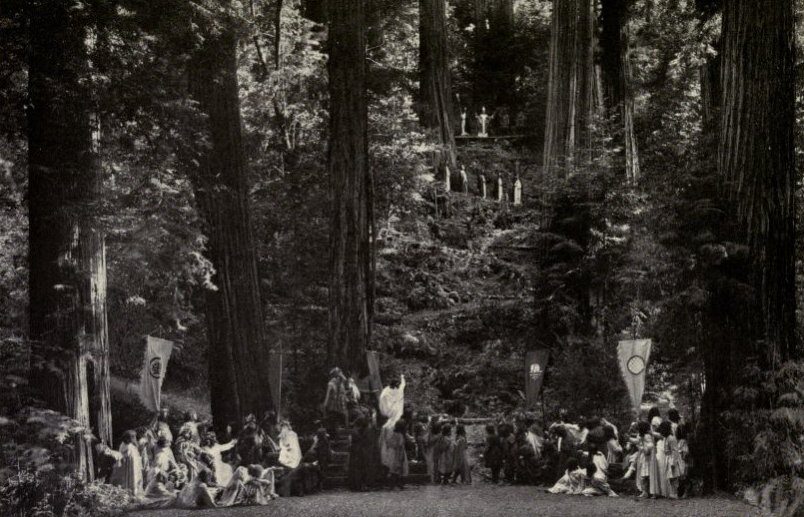
In 1989, a writer for Spy magazine named Philip Weiss talked his way in as a guest and stayed seven days. His account ran under the title "Masters of the Universe Go to Camp," and it remains the best look anyone has gotten. What it found was, mostly, deeply silly: gin fizzes before breakfast, drinking from morning to night, sing-alongs, and two kinds of theater. What he did not find was a conspiracy. He found a very long, very expensive party.
A few years later a reporter for People got in three times and came out with notes from the Lakeside Talks — then was recognized by an executive from Time Warner, which happened to own People. He was escorted out and the story was killed. The press could not expose the club, because the press was, in the relevant sense, also a member.
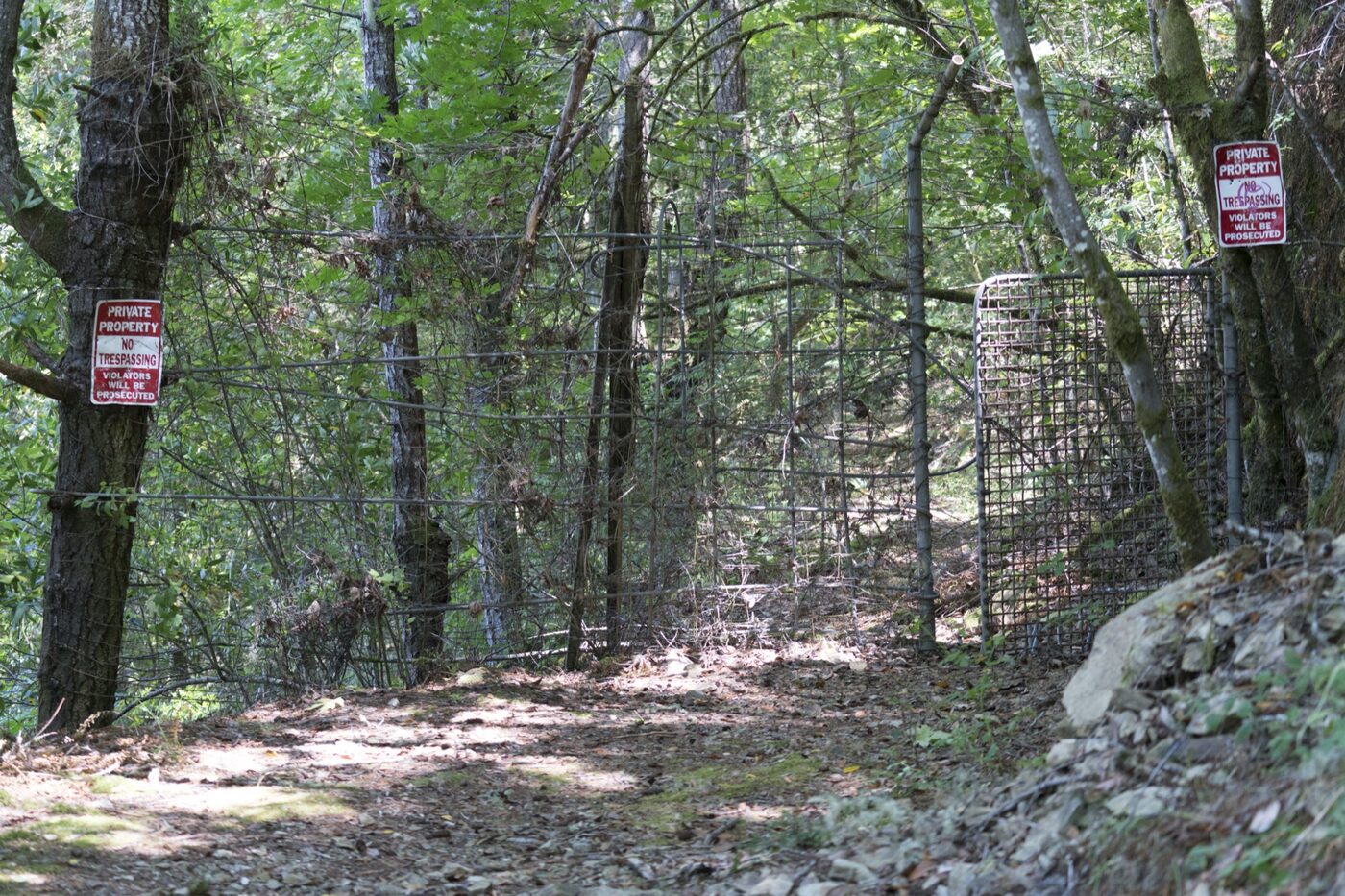
The footage most people have actually seen came in 2000, when a then-obscure broadcaster named Alex Jones sneaked in with a camera and filmed the Cremation of Care from the underbrush. Robed figures, the lake, the owl, the burning effigy — exactly as described. He narrated it as a live human sacrifice. It was papier-mâché. The owl, as ever, declined to comment. Two years later, a man who believed the sacrifice stories broke into the empty Grove at night, armed and masked. He had mounted a raid to stop a murder that was, and always had been, a piece of cardboard.
The Owl Declines to Comment
So here is the honest accounting. The Satanism, the world cabal, the darker rumors — none of it is supported by anything. The owl is a mascot that predates the conspiracy by a century. The effigy is papier-mâché. The robes are costumes from a Victorian pageant. But the summer-camp version is too cute the other way. It waves off a documented atomic-bomb meeting and the documented launch of a presidency as boys being boys. The truth sits in the uncomfortable middle, which is where most true things live.
And even the fully debunked, nothing-to-see-here version is this: the people who run the country go, in private, into the woods, in robes, and burn a man in effigy at the foot of a giant owl, then spend two weeks trading briefings no citizen is allowed to hear. You do not need a cabal to find that strange. And here is the part that never resolves. It was never the ritual — it is the silence. Most secret societies collapse the moment a reporter gets inside; there is nothing behind the curtain. The Grove just keeps working. People get in, describe the party, describe the owl, and the arrangements stay off the record, by design, for 150 years.
We know the Grove shaped at least one presidency, because Nixon said so himself. Everything else settled under those trees, we are simply not cleared to know.
It still happens, every July. The robes come out. The fire takes the cardboard. The men go up into the trees for two weeks and tell no one what was said. The spiders go in anyway. And the owl — forty feet of it, present at every fire since before any of them were born — watches them in, and says nothing. Which, by now, it has had a hundred years of practice doing.
Sources & Case References
- Wikipedia — "Bohemian Grove"
- Philip Weiss, "Masters of the Universe Go to Camp," Spy magazine (November 1989) — the most detailed firsthand account of the encampment.
- The September 1942 planning meeting at the Grove (attended by Ernest Lawrence, Arthur Compton, J. Robert Oppenheimer and others) is documented in Manhattan Project histories.
- ProPublica's 2023 reporting on Justice Clarence Thomas's undisclosed hospitality from Harlan Crow, which included visits to the Grove.
- Archival images via Wikimedia Commons: Owl Shrine — Aarkwilde, CC BY-SA 3.0; Grove side entrance — Brianhama, CC BY-SA 4.0; the owl & "Weaving Spiders" relief (Binksternet); Cremation of Care, 1907 and Grove Play, 1909 (Gabriel Moulin); early Grove camp, c. 1905 (The Pacific Monthly); J. Robert Oppenheimer, c. 1944 (U.S. Department of Energy, Los Alamos).