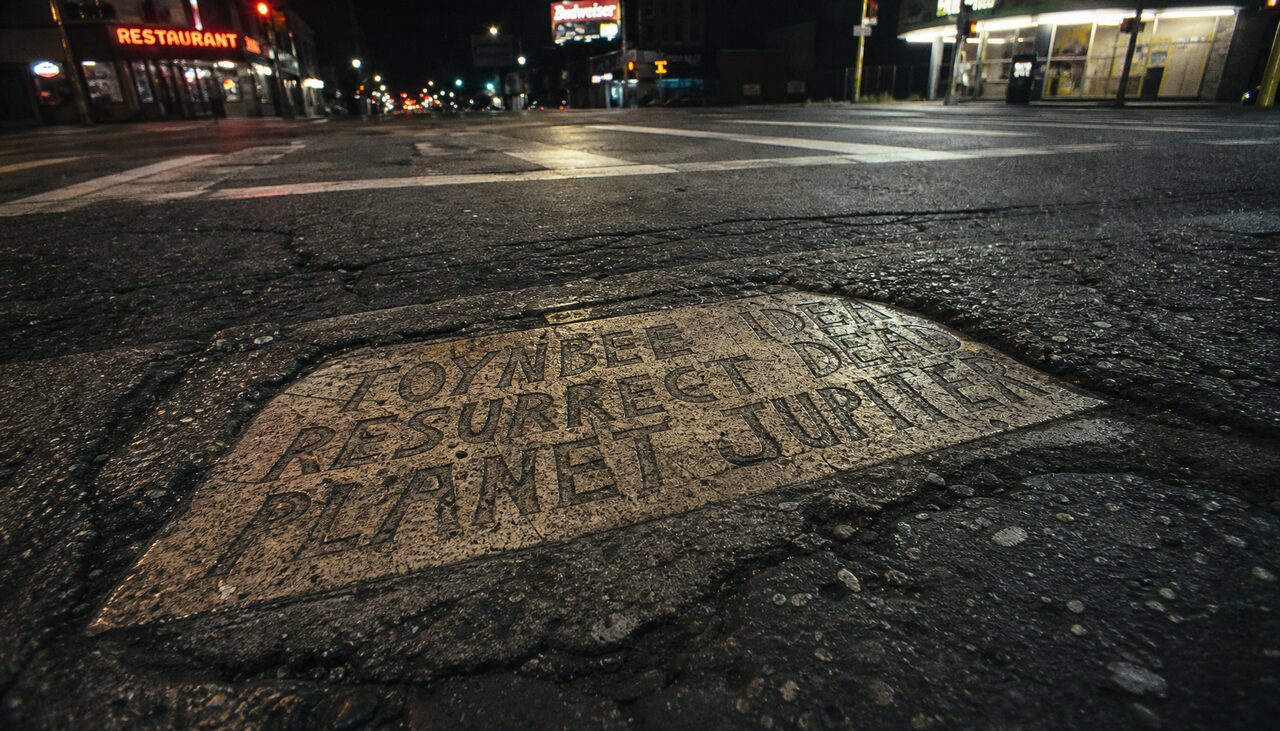
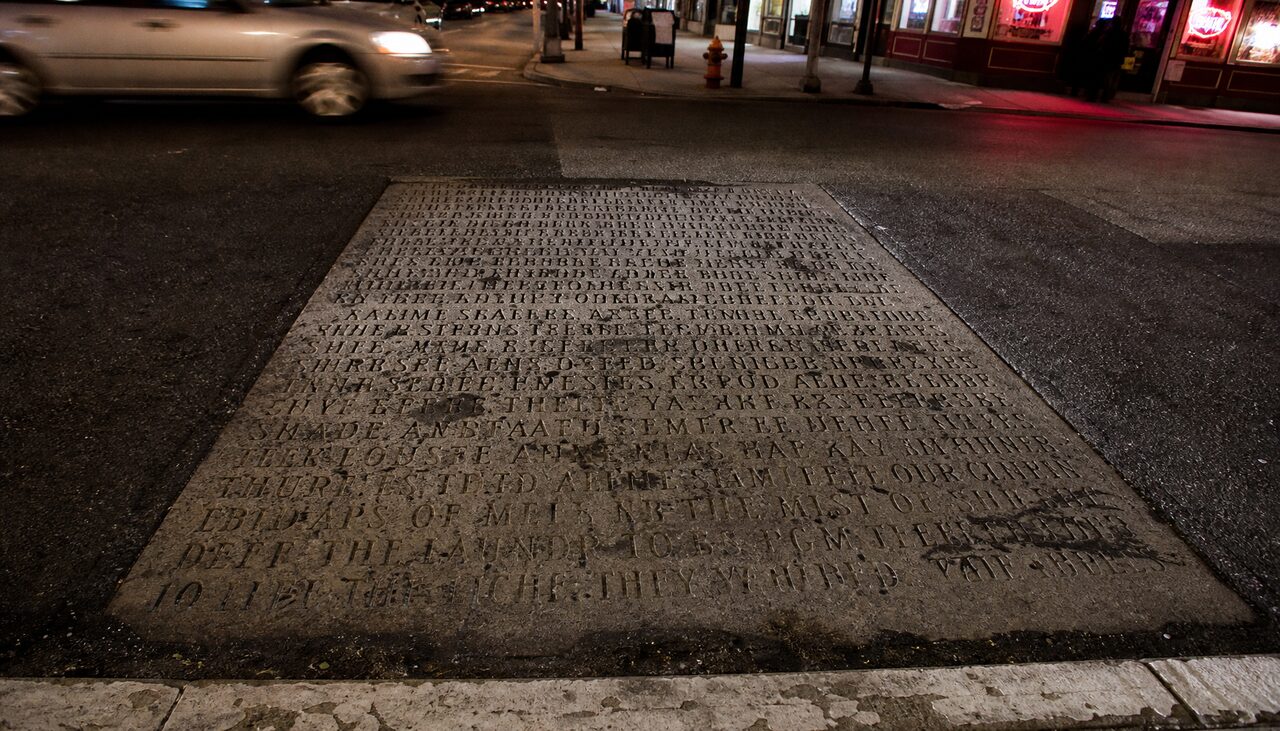
Sometime in the mid-1980s, someone in Philadelphia knelt at an intersection, pressed a square of linoleum into the asphalt, and drove away. The square was about the size of a license plate. Carved into it were the words: "TOYNBEE IDEA IN MOVIE 2001 RESURRECT DEAD ON PLANET JUPITER." Cars drove over it. It stayed. Then another one appeared, and then they began turning up in other cities entirely.
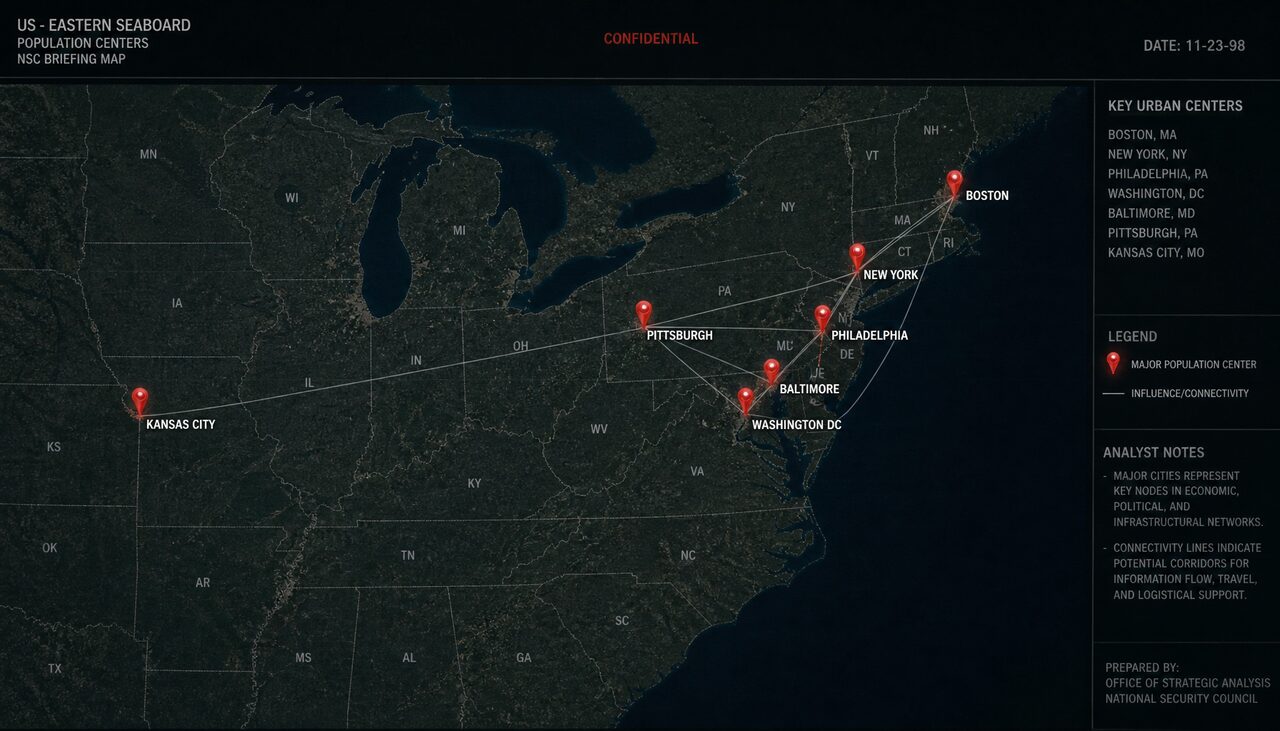
By the time anyone was counting, the same message had surfaced in New York, Washington, Baltimore, Pittsburgh, Boston, and Kansas City. Then it appeared in South America. Nobody knew who was placing the tiles. Nobody knew how. And nobody could fully explain what the message meant, even after every word in it had been individually identified.
What the Road Said
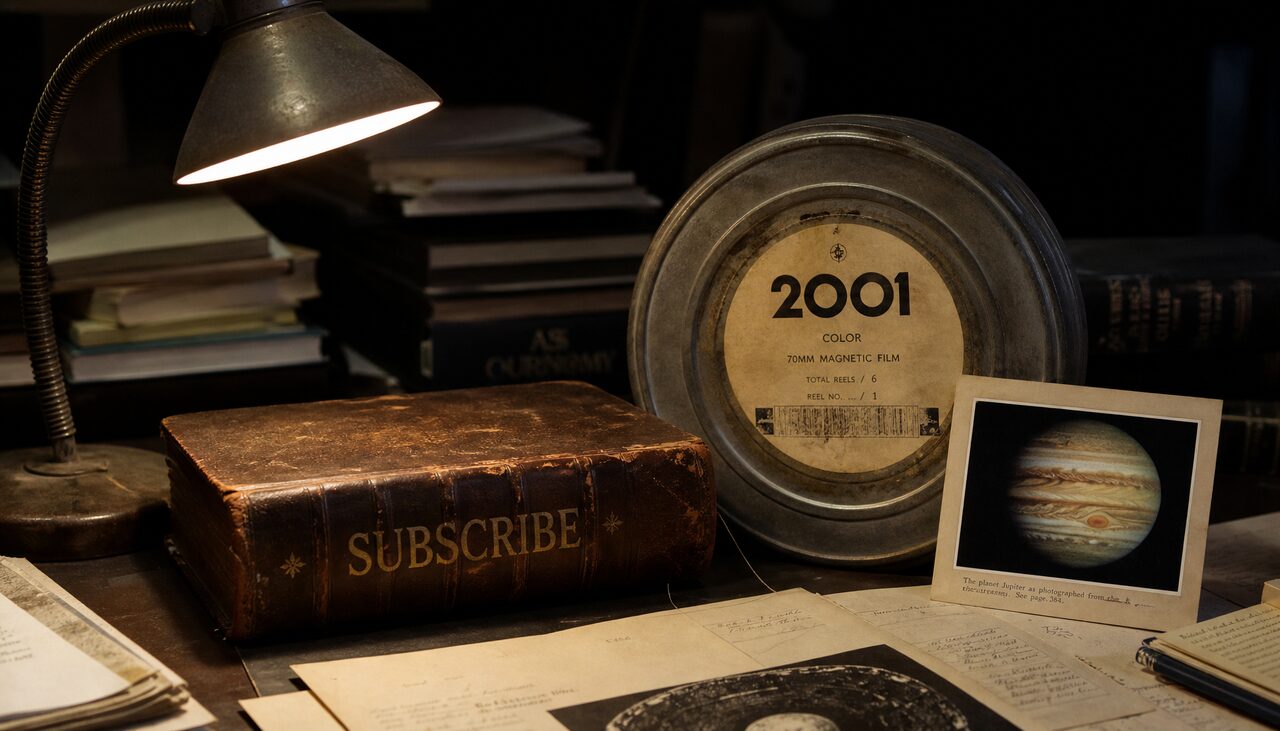
The message references three things. Arnold Toynbee. Stanley Kubrick's 1968 film 2001: A Space Odyssey. And the concept of physically resurrecting the dead on the planet Jupiter. It is worth taking these in order, because each one, on its own, is reasonable. The trouble is the assembly.
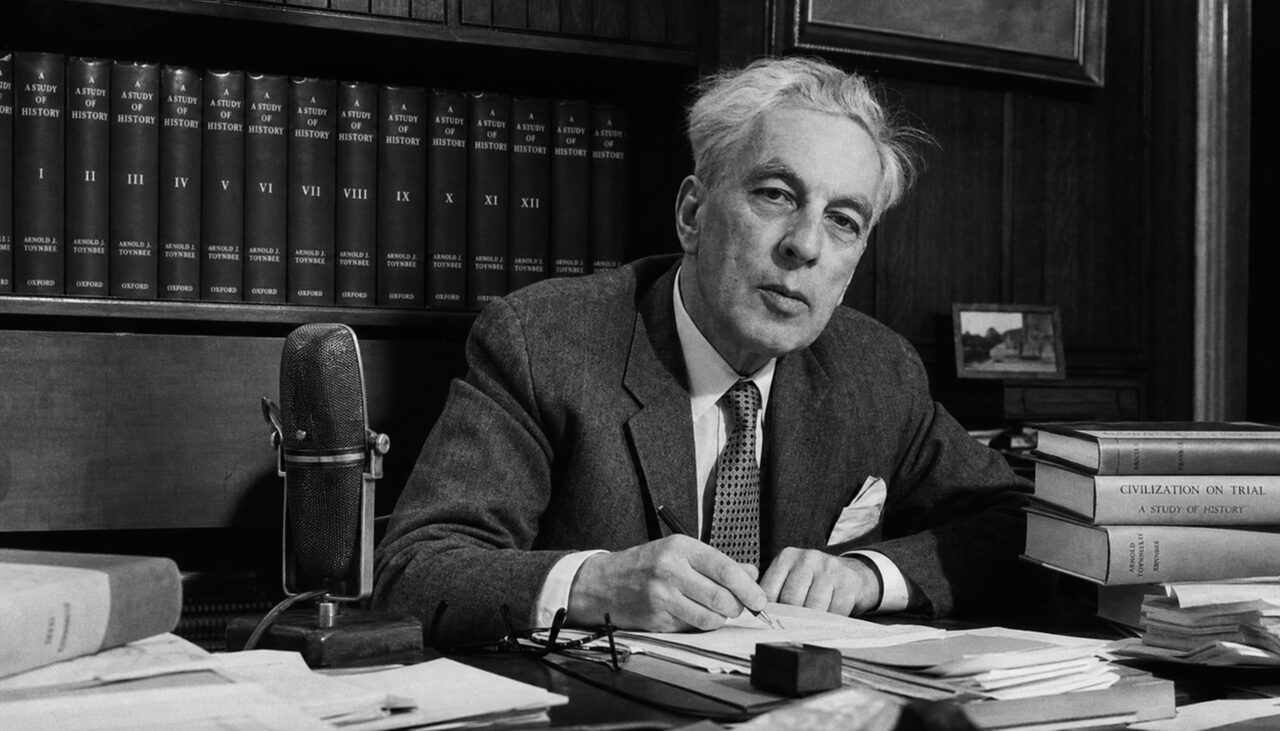
Arnold Toynbee was a British historian who died in 1975. His twelve-volume A Study of History made him one of the most widely read scholars of the twentieth century. His central interest was civilizations — how they rise, how they collapse, and the role of creative minorities in shaping human progress. He was, in other words, a serious person. Buried in his autobiography, though, are passages about the afterlife — specifically, the idea that human survival after death is not automatic, that it requires effort, that it might be, in some sense, a construction project.
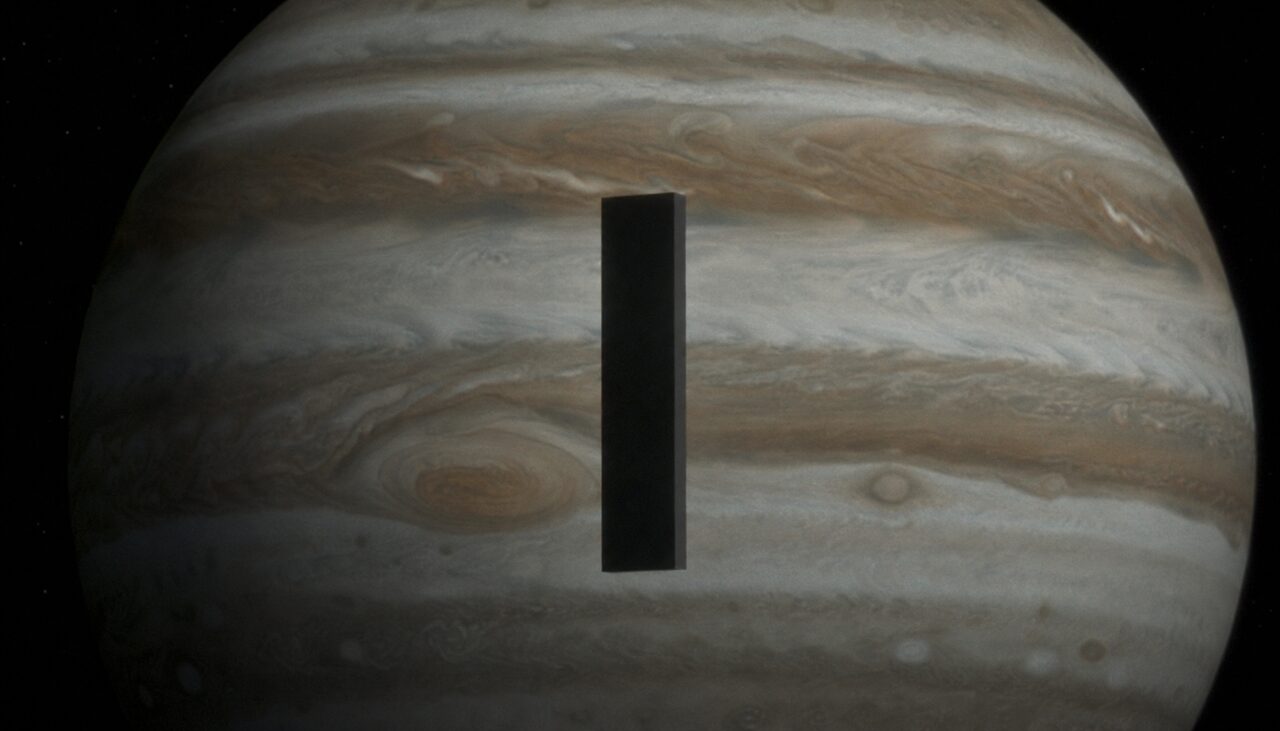
Kubrick's film ends with a sequence in which the astronaut Dave Bowman is transformed — arguably reborn — near Jupiter. The film does not explain this. Kubrick did not explain this. When asked, Kubrick declined to explain this, on the stated grounds that the refusal was the point. The tiles take these two sources and weld them into a single thesis: that the dead can be resurrected, that the mechanism is somehow described in 2001, and that Jupiter is where it should happen. No argument is offered. No supporting logic is provided. The message is delivered the way a government agency delivers a regulation. As a thing already settled.
The Letters Stopped
The first known media reference to the tiles appeared in a 1994 article in the Baltimore Sun. But the idea had been documented earlier. In 1983, a Philadelphia columnist named Clark DeLeon wrote about a man — calling himself James Morasco — who had been contacting newspapers and radio shows with a plan to colonize Jupiter using the resurrected dead. Morasco said the idea came from Toynbee and Kubrick. He was, by all accounts, not taken seriously.
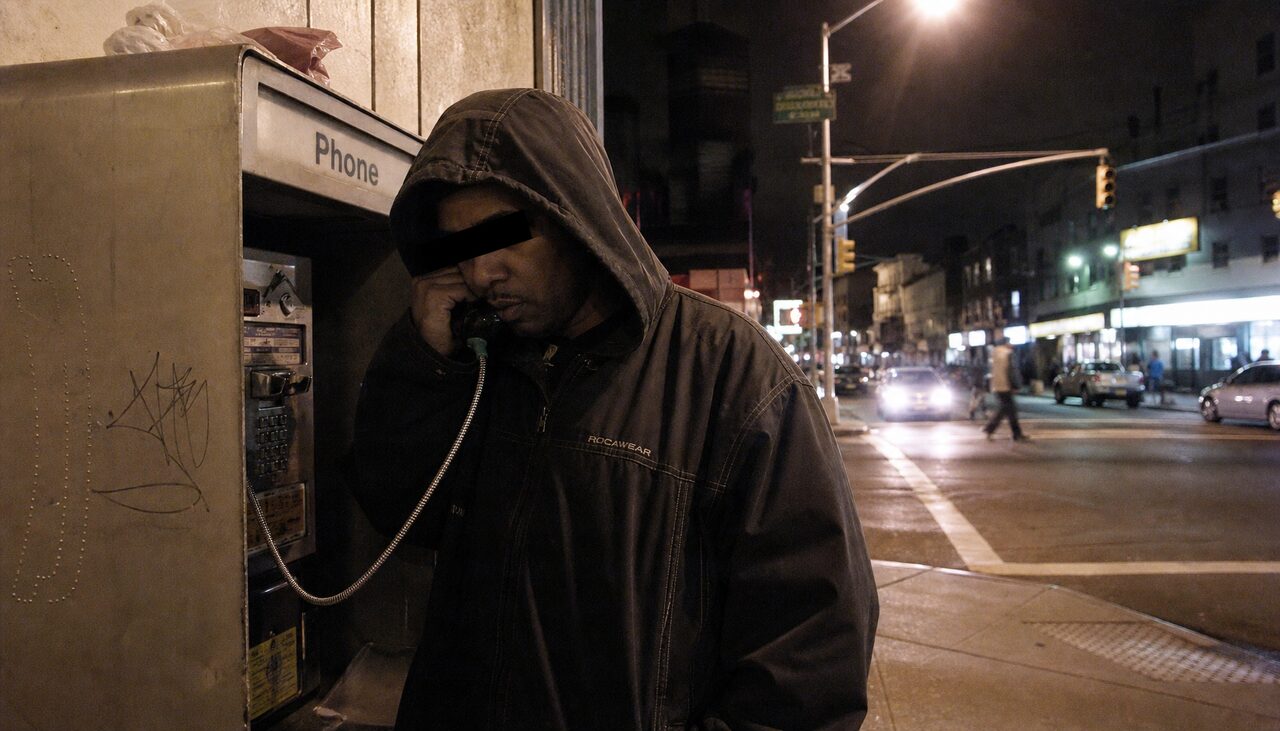
He called Larry King's radio show. He wrote to NBC, CBS, and the owner of the Philadelphia Inquirer. Everyone said no. DeLeon was the only one who wrote about it, and the tone of the column was not what you would call supportive. Then the letters stopped. And the tiles started. Whoever Morasco was, he appears to have concluded that the press would not carry the message, and switched to a medium that did not require their permission.
A Hole in the Floor
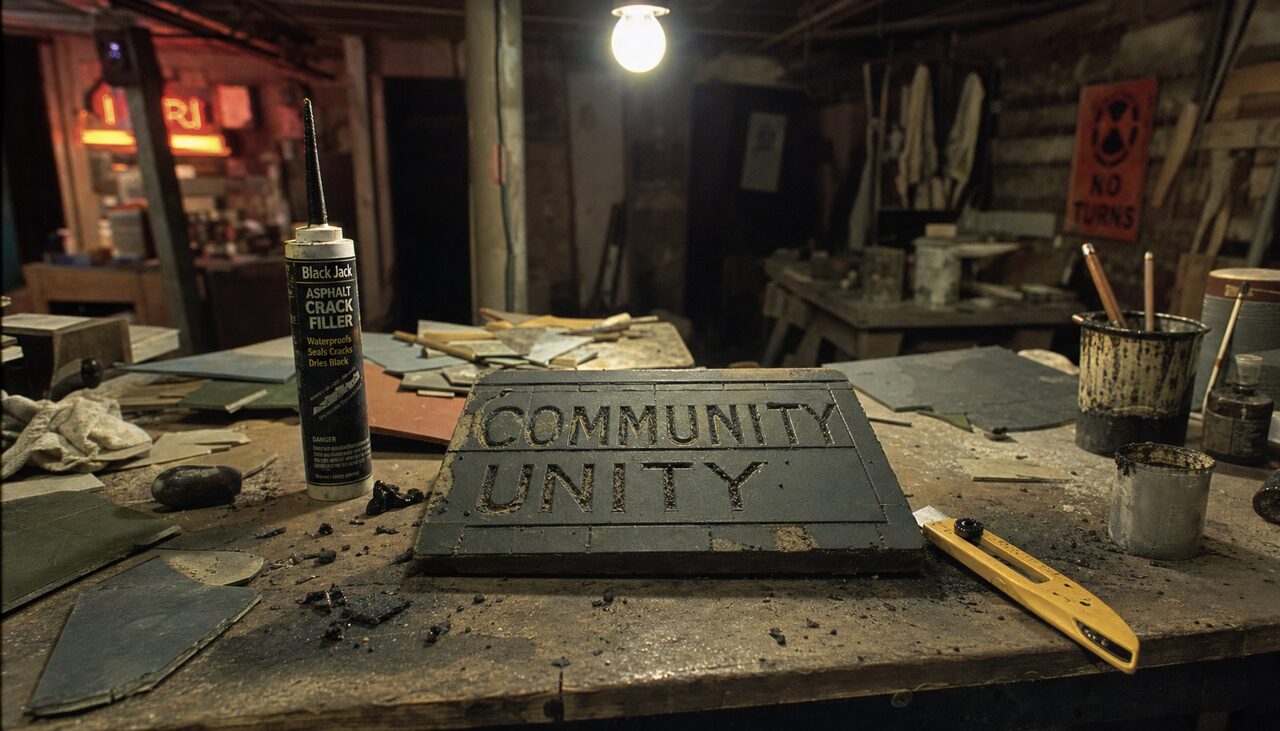
The tiles were made from layers of linoleum and asphalt crack filler — the kind of compound sold at hardware stores — pressed together and cut to roughly the size of a license plate. The text was carved into the linoleum, sometimes neatly, sometimes not. The assembled tile was placed on the road surface and sealed with tar.
Which raises the question that took researchers years to answer: how does one install a license-plate-sized message into the middle of a public road, at an intersection, in a major American city, without being seen.
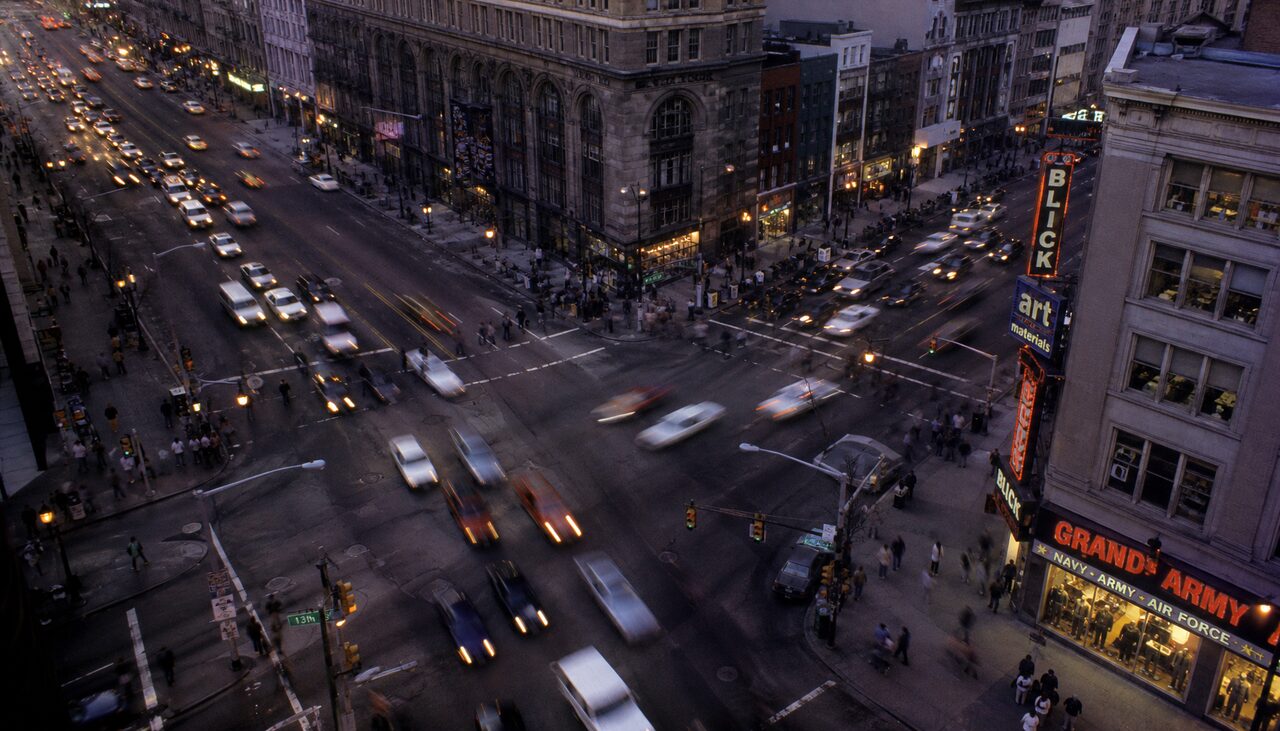
The prevailing theory, which emerged from the 2011 documentary Resurrect Dead: The Mystery of the Toynbee Tiles, involves a car. With no passenger seat. And a hole cut in the floor. The tiler would drive to a target intersection, stop briefly at a red light, drop the prepared tile through the hole onto the pavement, press it down with cardboard, and drive away. Traffic did the rest. The weight of passing tires pushed the tile deeper into the asphalt until it was, effectively, sealed. It is, by any reasonable standard, an impressive system.
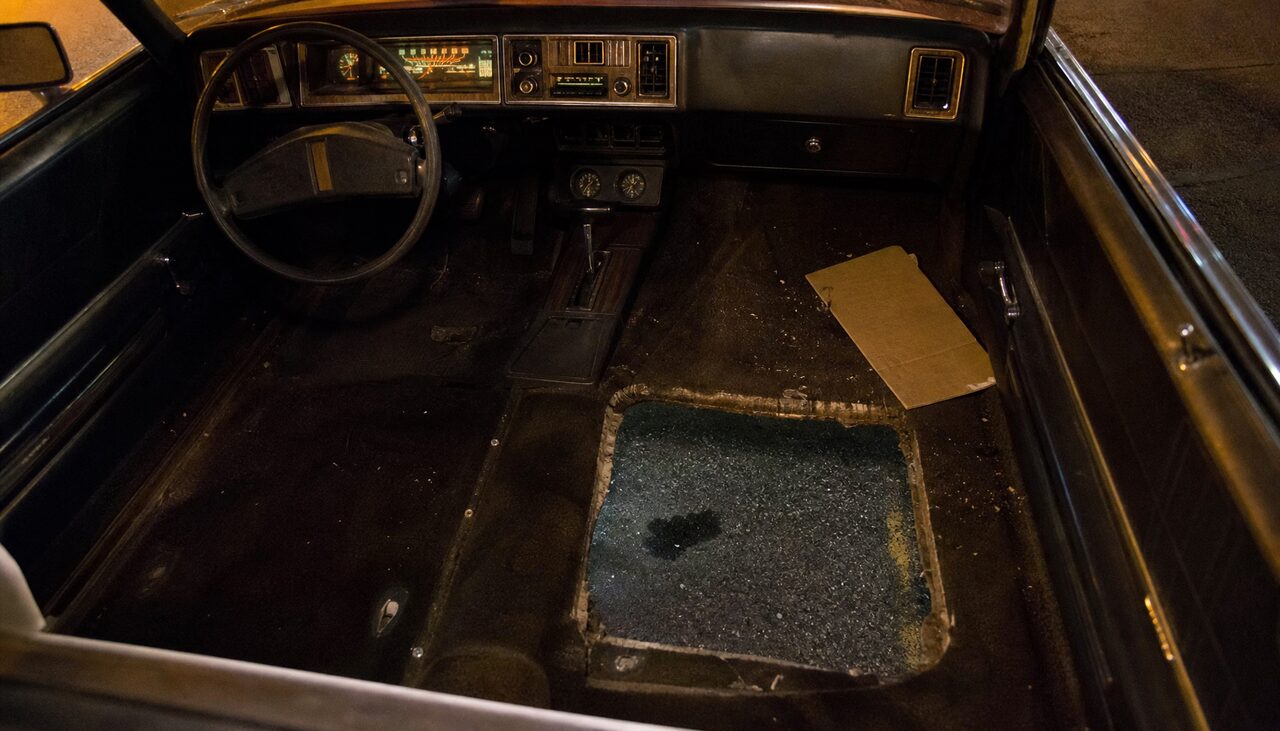
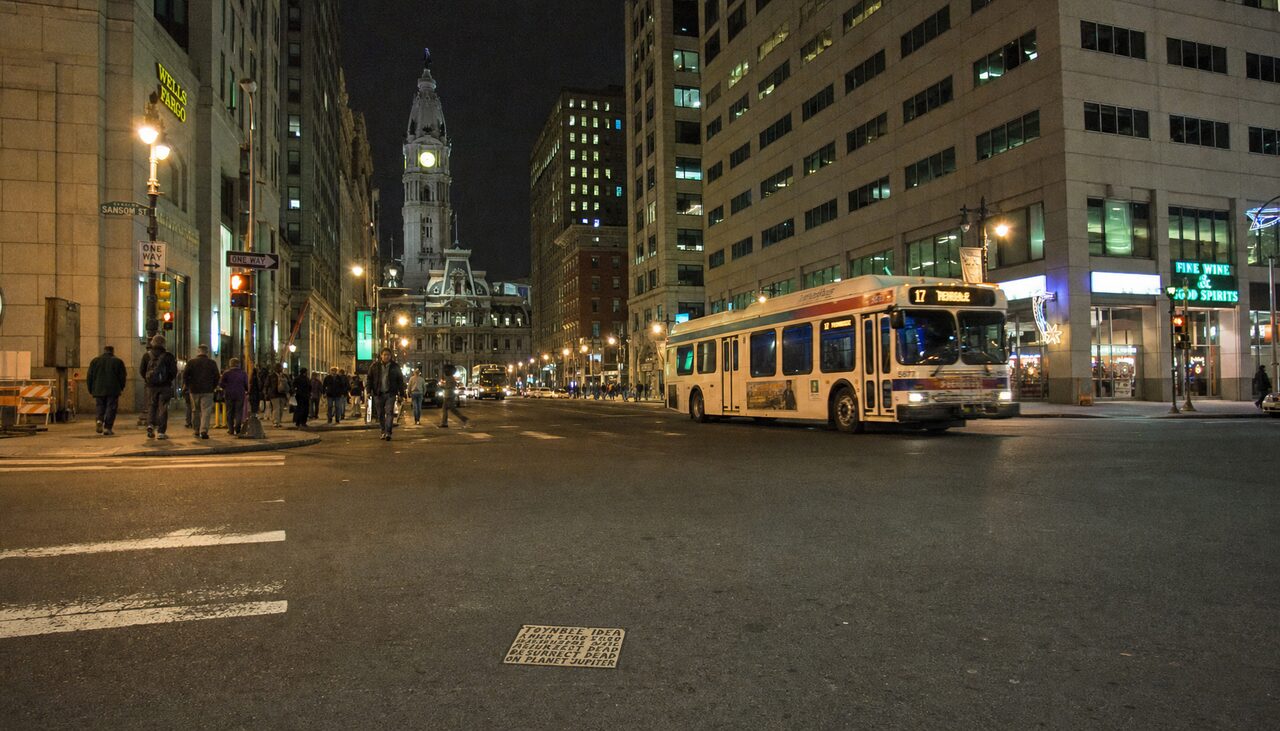
The tiles appeared in roughly two dozen American cities, mostly in the mid-Atlantic and Northeast, with Philadelphia holding the highest concentration. Most were placed at intersections, where repeated compression embedded them faster. Some survived for decades. Others vanished in routine repaving, which means the surviving count is a floor, not a total.
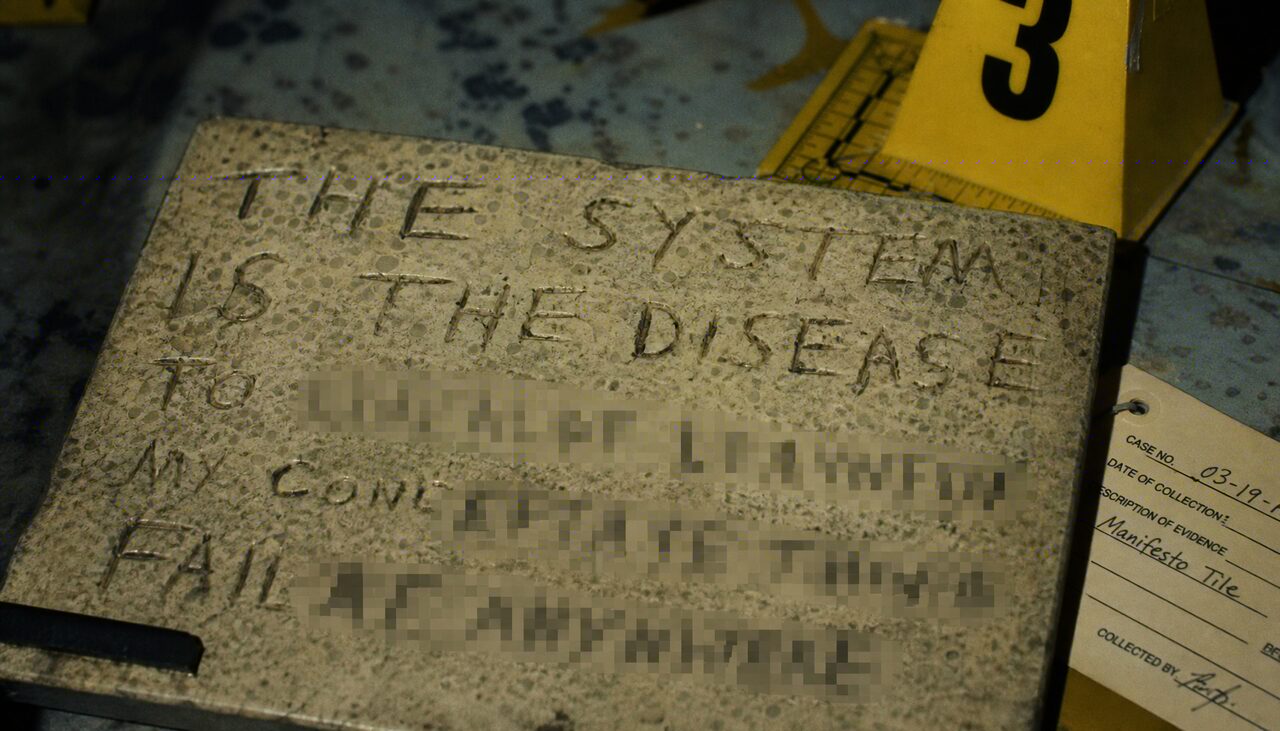
Then, in the late 1990s, the tiles changed. Longer. Angrier. Researchers eventually called them the manifesto tiles. Where the originals had been cryptic but neutral — Toynbee, Kubrick, Jupiter, dead — the manifesto tiles ran to paragraph length: rants about the media, about the newspaper chain Knight-Ridder specifically, about the Soviet Union, about a global conspiracy to suppress the Toynbee Idea. One tile, found in Philadelphia and paved over in 1998, laid out a detailed account of the tiler fleeing the country in 1991 to escape what he described as Knight-Ridder's "great power to destroy."
Some of the later tiles also carried prejudiced references — language aimed at specific groups that was not, by anyone's reading, friendly. The earlier tiles had been cryptic. The later ones were cryptic and hostile.
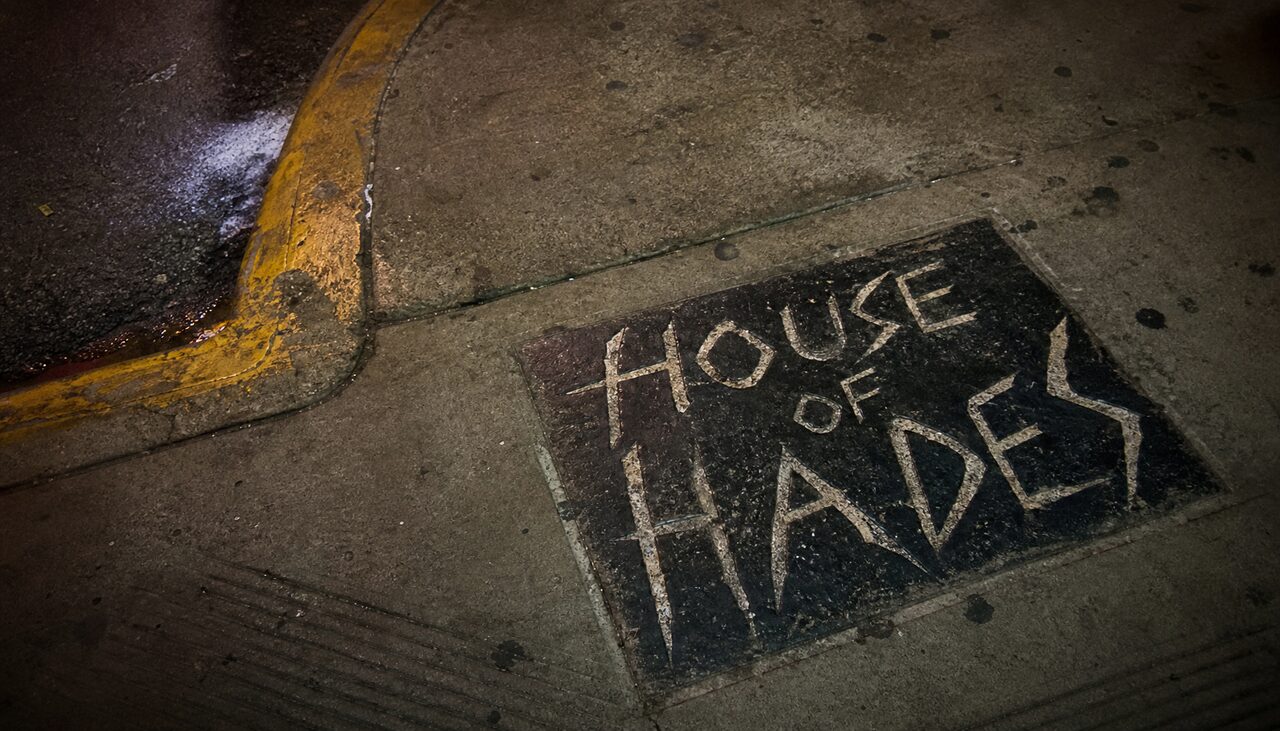
Around the same time, a second set of tiles began appearing, attributed by most researchers to a different person entirely. Found in New York, Philadelphia, Pittsburgh, and Buffalo, these were also anti-media. One recurring text read: "HOUSE OF HADES TILES MADE FROM THE GROUND BONES OF DEAD JOURNALISTS." Whether the House of Hades tiler was the original tiler, an imitator, or someone with their own separate grievance against the press has never been determined. The original Jupiter tiles, meanwhile, kept appearing into the 2000s, in cities that had never had them before. The technique evolved slightly. The dedication did not waver.
He Shut the Door
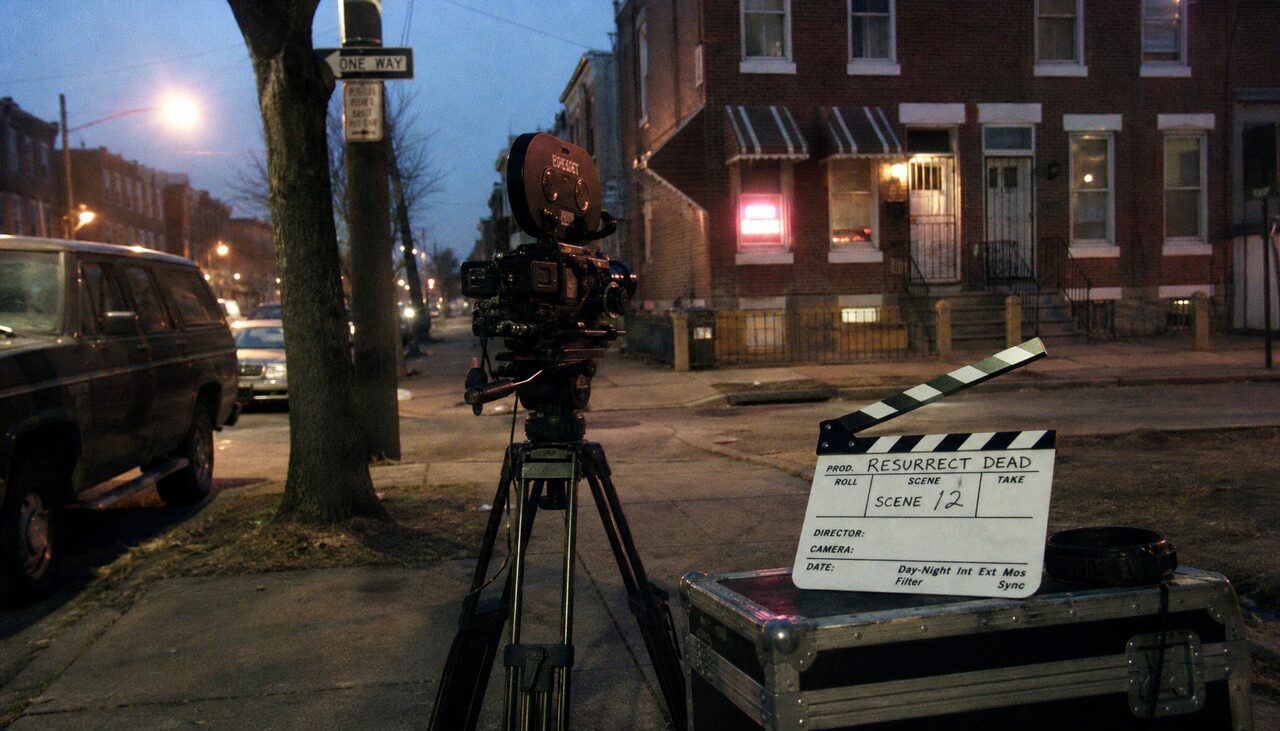
In 2011, Resurrect Dead, directed by Jon Foy, presented a detailed case identifying the original tiler as a reclusive Philadelphia man named Severino "Sevy" Verna.
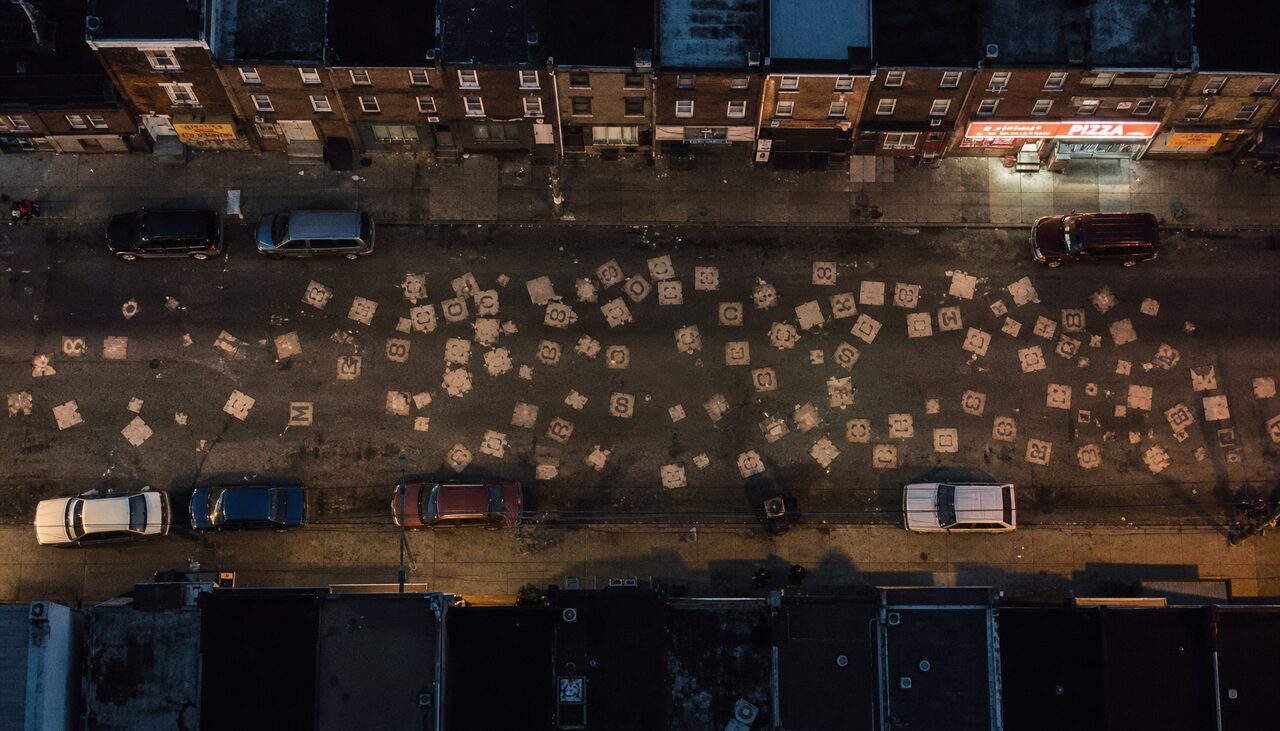
The evidence was circumstantial but dense. The streets immediately around Verna's house were littered with small test tiles — proto-tiles, the filmmakers called them. Practice runs. Many were partial; some held only single letters. They had been placed in such density that the block itself was, in effect, a draft. Neighbors described Verna as deeply reclusive. One mentioned that he drove a car that appeared to have no passenger seat. Which is, of course, a detail.
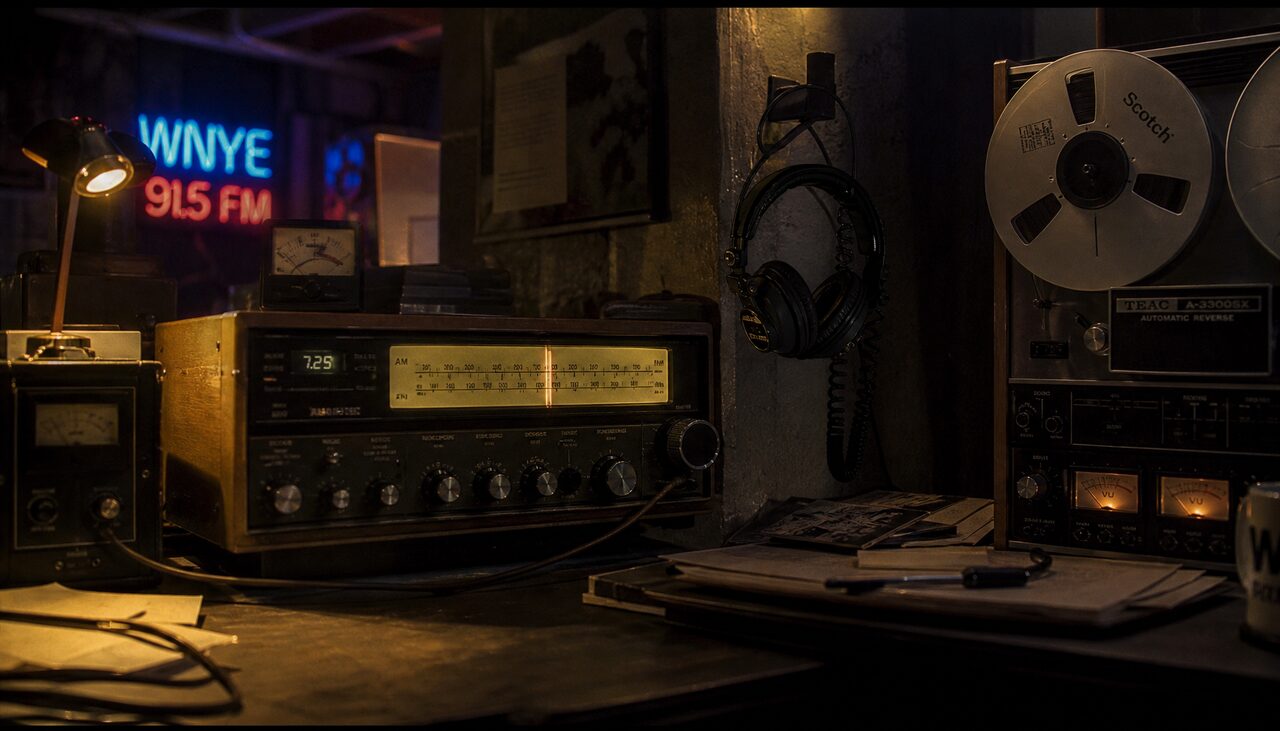
Independently, ham radio operators in the Philadelphia area reported picking up shortwave broadcasts from someone discussing the Toynbee Idea and what the broadcaster called "molecular resurrection" on Jupiter. The voice matched no known broadcaster. The name James Morasco — the alias on the 1983 letters and the Larry King call — was traced to a real person: a Philadelphia social worker who had died in 2003. The documentary's theory was that Verna had borrowed the name because the real Morasco lived nearby.
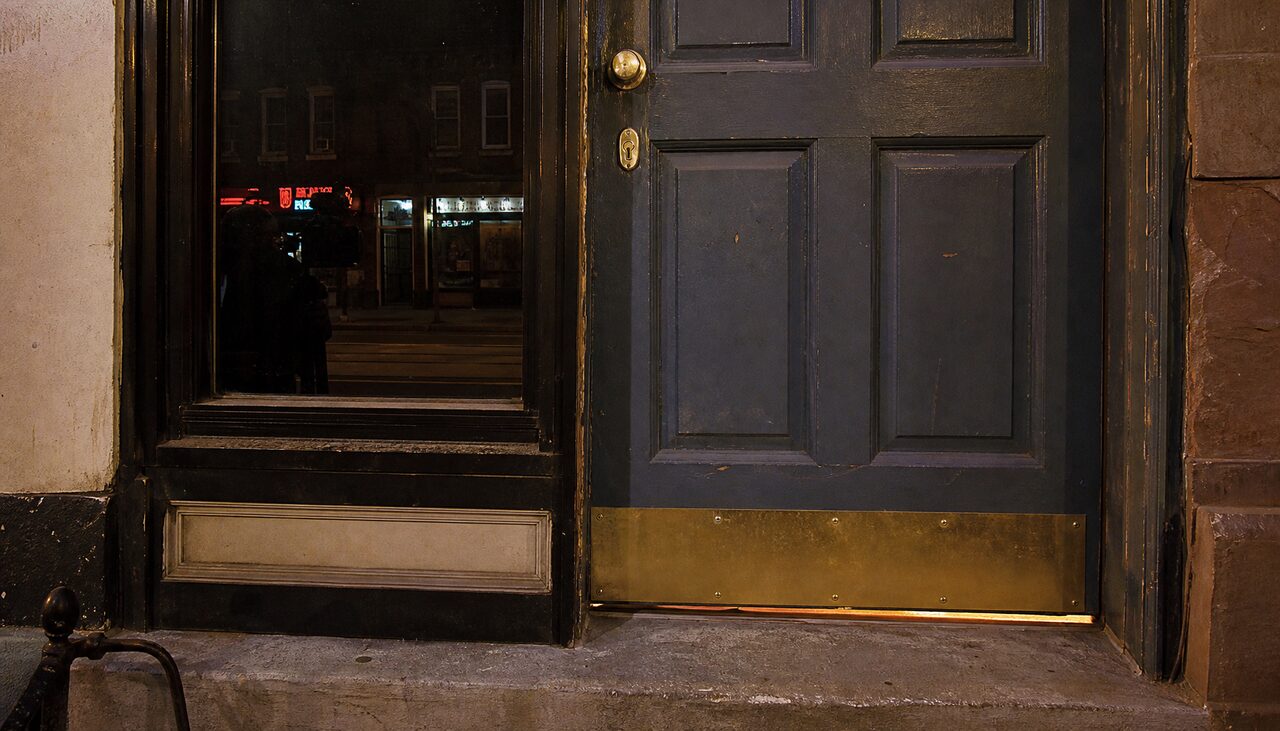
When the filmmakers finally located Verna's home and went to the door, he opened it briefly. He did not confirm involvement. He did not deny involvement. He shut the door. As an investigative conclusion, this is the equivalent of walking ninety-five percent of the way across a bridge and finding the last plank missing.
Monument
The skeptical explanation, which is also the most likely one, is this: a mentally unwell man spent decades embedding cryptic messages into American roads as an expression of an idiosyncratic worldview combining dead historians, science fiction, and conspiracy thinking. The manifesto tiles — the prejudiced references, the Knight-Ridder paranoia, the claims of international flight — support that reading. They suggest a mind that was not merely eccentric but deteriorating.
That explanation accounts for the evidence. It requires no extraordinary claims. It is tidy. What it doesn't quite account for is the scale.
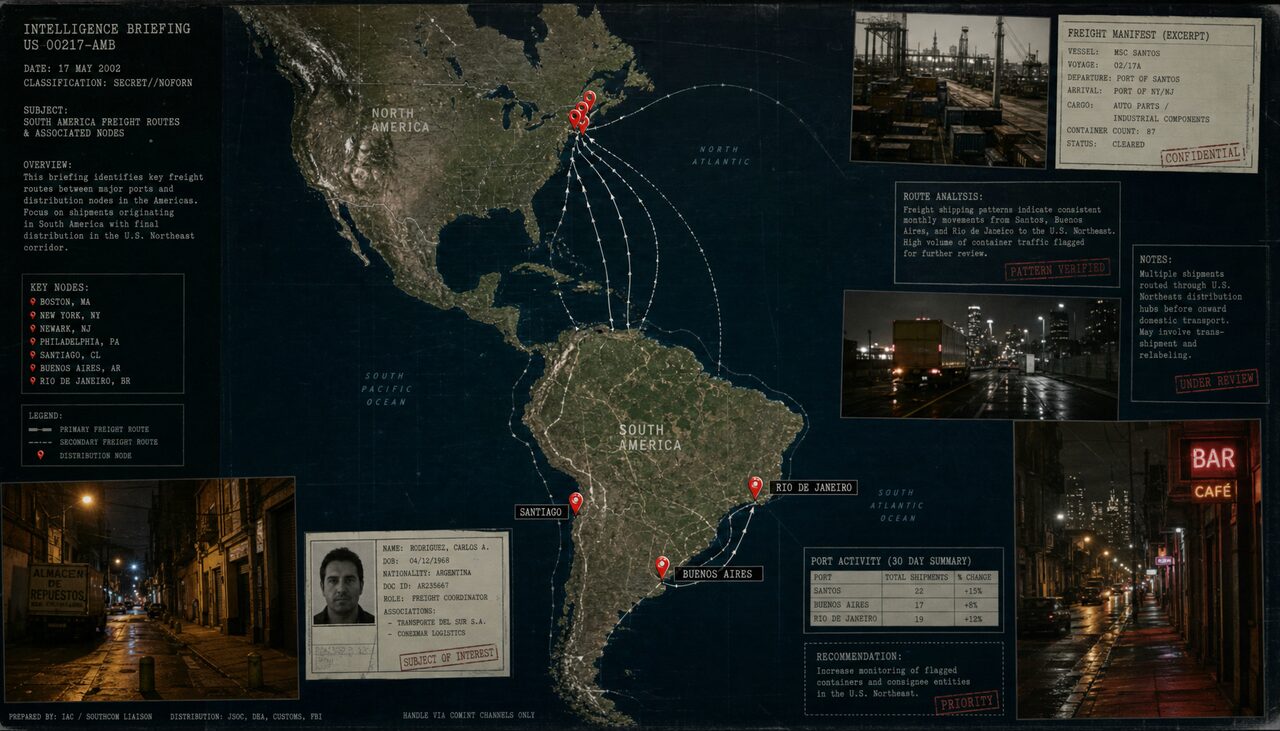
Tiles in twenty-four American cities. At least three in South America — Santiago, Buenos Aires, and Rio de Janeiro. A freight company whose trucks served every American city where tiles appeared also had business dealings in South America, and a tile recovered in Chile reportedly contained a Philadelphia address. So the logistics can be reconciled. But the rest is harder to file: decades of work, across thousands of miles, apparently alone, apparently at night, for an audience of pedestrians who would mostly walk over the message without noticing.
That isn't mental illness. That's commitment. The two are not mutually exclusive, but they are not the same thing either. The phrase "RESURRECT DEAD ON PLANET JUPITER" does not hold together as a coherent philosophy. It holds together as something else: a private thesis, set into the infrastructure of the Americas by someone who believed it with enough conviction to spend a lifetime making it permanent.
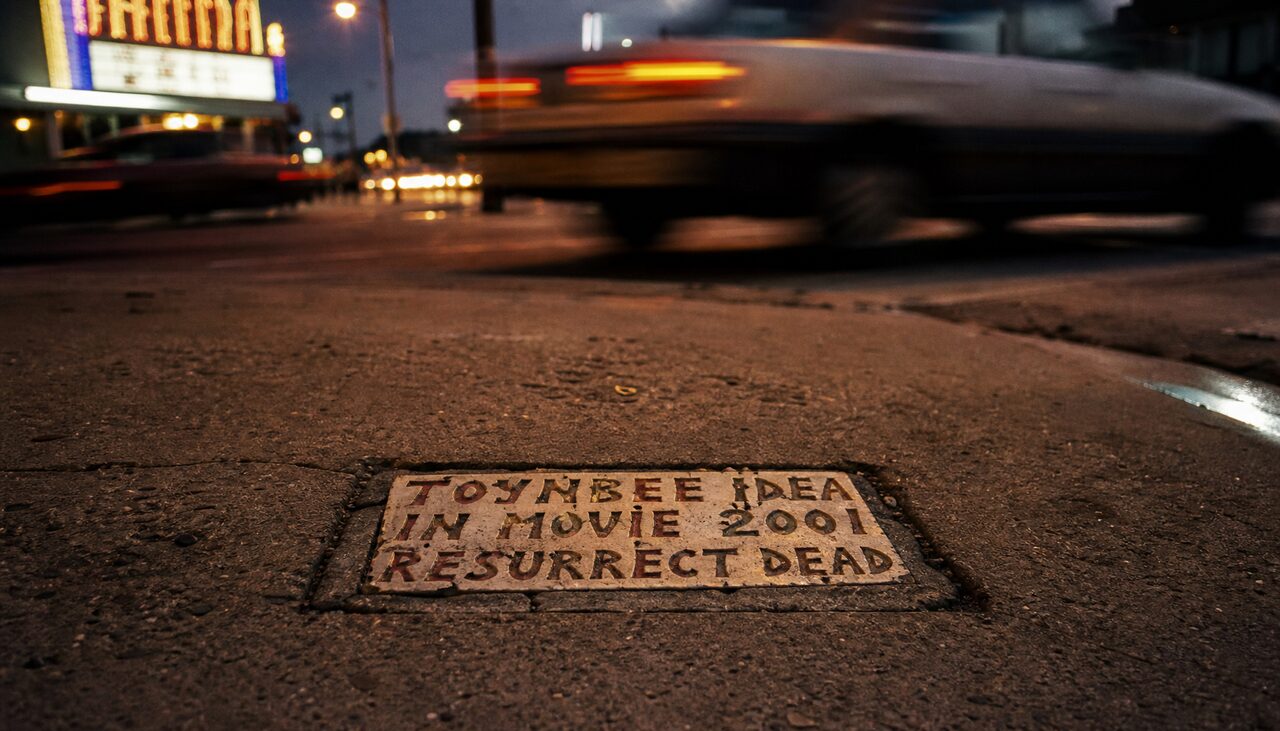
The tiles are embedded in roads that will outlast the person who placed them. Some already have. There is a word for an object designed to carry a message beyond the lifespan of its maker. The word is "monument." Whether the message makes sense is, apparently, optional.
The Latest Data
As of the most recent surveys, Toynbee tiles have been documented in at least twenty-four American cities and three South American capitals. New tiles were still being reported into the 2020s, though whether these are originals or the work of imitators is, at this point, almost moot. Severino Verna has never spoken publicly about the tiles. The message has never been explained to anyone's satisfaction — including, possibly, the satisfaction of the person who wrote it.
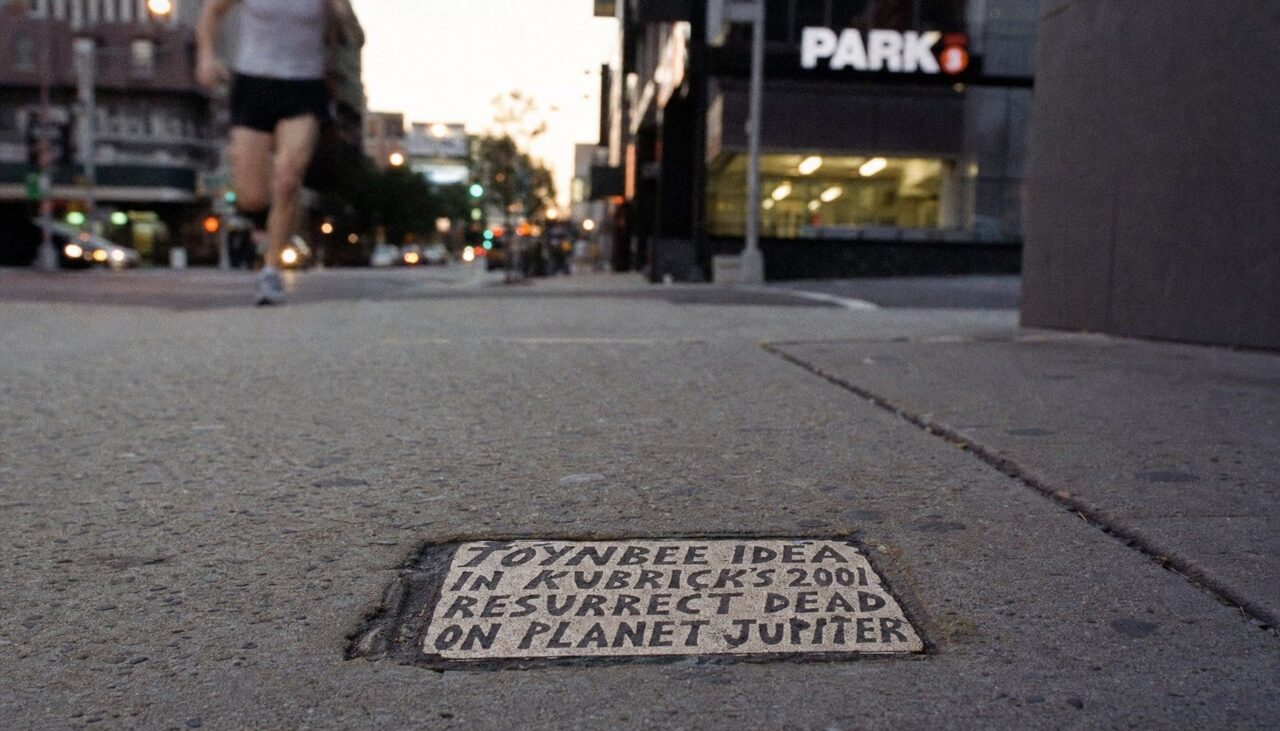
The tiles are still in the roads. Traffic passes over them every day. The dead, as of the latest available data, have not been resurrected on Jupiter.
Sources & Case References
- ToynbeeIdea.com — "What is it?"
- ToynbeeIdea.com — early tiles and styles
- Atlas Obscura — "The Tantalizing Mystery of the Toynbee Tiles" (2017)
- Atlas Obscura — Manhattan Toynbee Tiles
- Jon Foy (dir.), Resurrect Dead: The Mystery of the Toynbee Tiles (2011)